



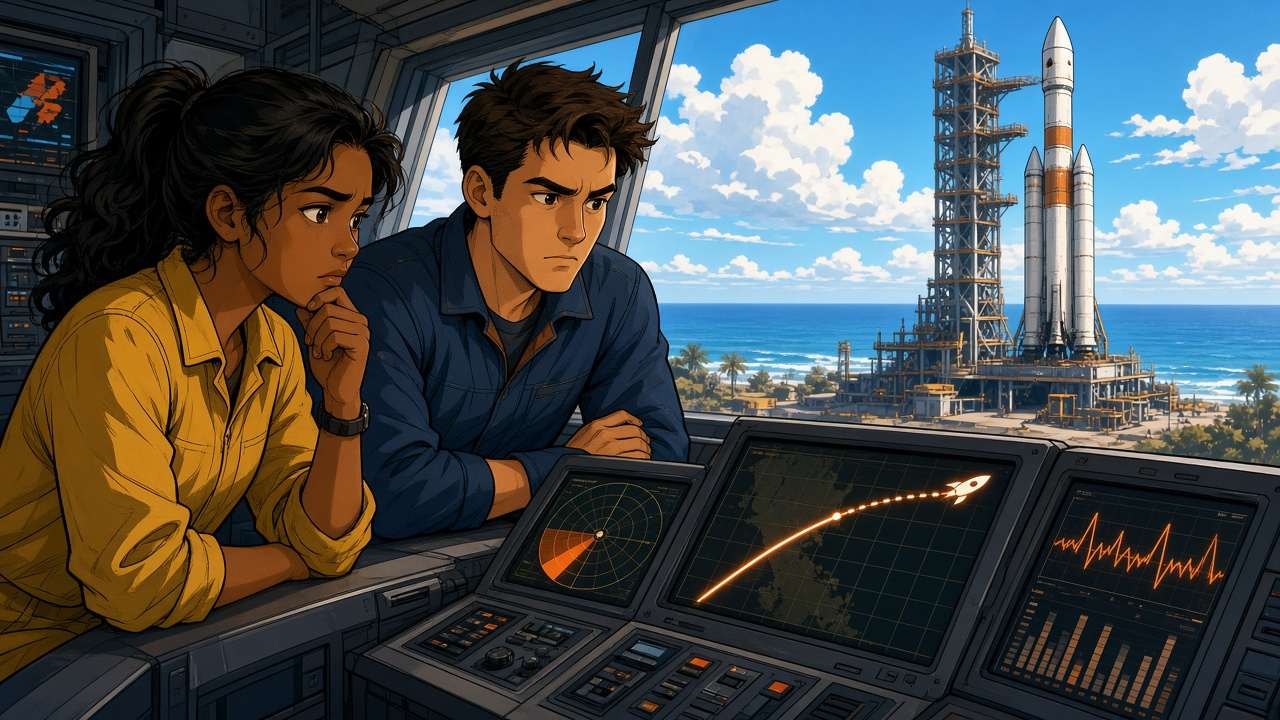

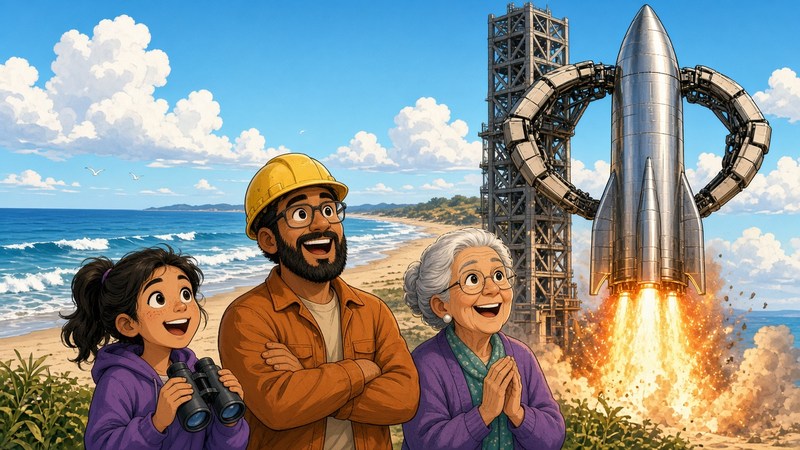
SpaceX’s most ambitious Starship test so far got off to a mixed start on Friday. During Flight 15, launched from the company’s Starbase site in Boca Chica, Texas, the giant rocket reached space as planned, but the attempt to catch the Super Heavy booster with the launch tower’s mechanical arms, nicknamed “chopsticks”, was called off.
The 124-metre rocket lifted off at 16:45 local time, the BBC reported. About six and a half minutes later, the booster was supposed to fly back to the tower and be plucked out of the air. Instead, according to reports, an engine-related issue led SpaceX to divert it to the Gulf of Mexico, where it burst into flames as it came down. “Safety is always the number one priority,” a SpaceX spokesperson said during the livestream, adding that the team was testing manoeuvres it had never done before.
The good news for SpaceX is that the upper stage, called the Ship, continued its journey into orbit. It was deploying 26 Starlink satellites and was scheduled to circle the Earth 14 times before returning to the launch site about 22.5 hours after liftoff. That sets up a potential historic moment on Saturday: the first attempt ever to catch the Ship itself with the tower arms, planned for around 21:15 GMT. SpaceX has said it will only go ahead after carefully checking the vehicle’s condition in space; if anything looks wrong, the Ship can be brought down in the ocean instead.
Catching both stages is the key to SpaceX’s dream of a fully reusable rocket that can fly again quickly and cut the cost of reaching space. The company has caught the Super Heavy booster on three earlier flights, but the Ship, which only reached orbit for the first time in September, has never been grabbed by the chopsticks. Saturday’s decision will show how close that goal really is.