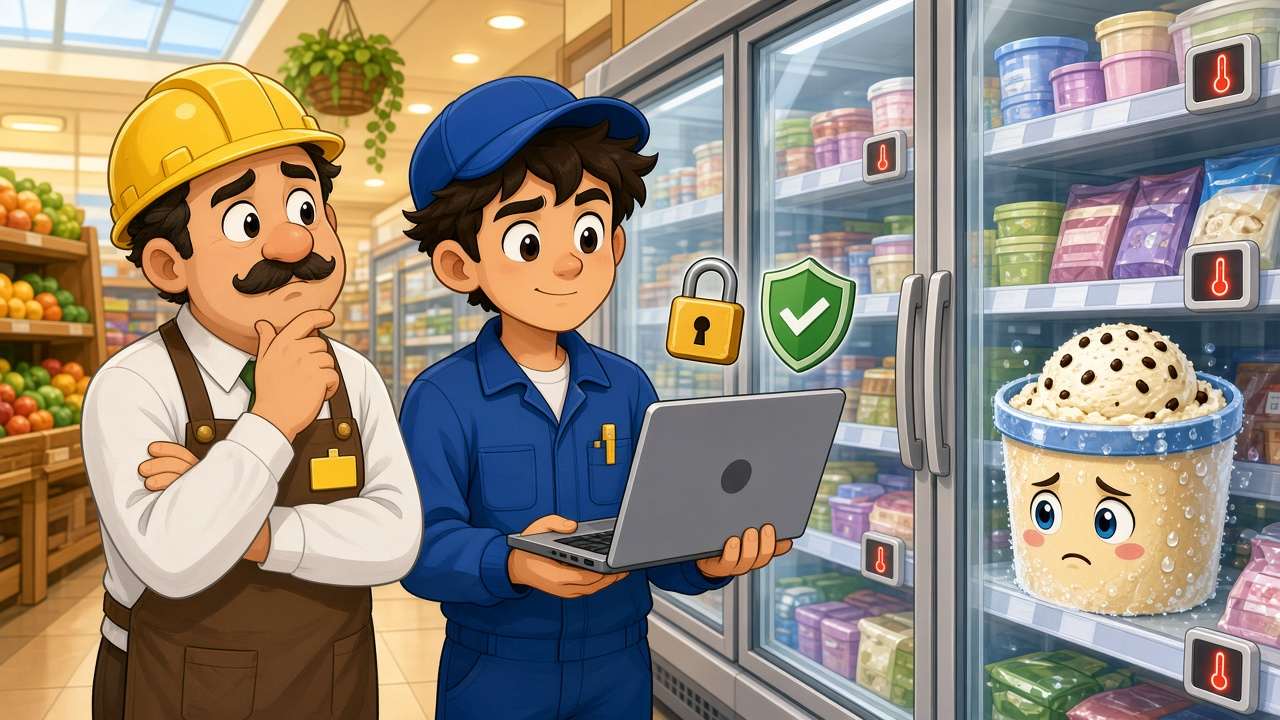
For a few days in October, shoppers across France walked into supermarkets and found something deeply wrong with the frozen food aisle. Ice cream had turned to soup, chilled meat was warm to the touch and staff were hauling entire inventories of perishable goods into skips. Now, almost a month later, Paris has put a name to the culprit. On Monday, 9 November 2026, French foreign minister Jean-Noël Barrot said the attacks were carried out by Iran’s Islamic Revolutionary Guard Corps, and he promised that Europe-wide sanctions would follow.
Barrot made the announcement at a press briefing held on the sidelines of the G7 summit in Paris, which gave the moment unusual diplomatic weight. He described the operation as an act of “unprecedented scale and unprecedented aggression” and called it “a major violation of the nation’s interests”. Thanks to the work of government agencies, he said, France could confirm that the Revolutionary Guards were responsible. Iran’s ambassador was summoned to the foreign ministry so that France could protest, in Barrot’s words, “in the strongest possible terms”.
The scale of the original attack explains why the government reacted so sharply. On 11 and 12 October, hackers took remote control of the digital thermostats that regulate commercial refrigeration. According to reporting by The Guardian, thousands of freezers, fridges and chiller cabinets in as many as 700 supermarkets and shops across France were affected. Units that normally hold food at temperatures as low as minus 27 degrees Celsius were pushed to well over 50 degrees in some cases. Thousands of tonnes of food had to be thrown away. In some stores, the sudden heat even started fires, which set off sprinklers and caused water damage on top of the spoiled stock.
How investigators traced the attack to Tehran
The technical case was laid out by Paris public prosecutor Laure Beccuau, who spoke on the same day as the foreign minister. She said specialist investigators and state agencies had identified a “modus operandi” characteristic of Shahid Kaveh, a cyber warfare unit linked to the IRGC. The clues included the use of Farsi and IP addresses that led back to devices located in Iran. Her office has opened an investigation targeting the head of Shahid Kaveh, his deputies and “others who will be identified”.
The suspected offences sound dry on paper but carry serious weight in French law: fraudulent attacks on an automated data processing system committed by an organised gang, and causing damage that is dangerous to people. Beccuau added that the offences were aggravated because they were committed to serve a foreign power, in this case Iran. Realistically, nobody expects the members of a state-backed hacking unit to appear in a Paris courtroom any time soon. But a formal case creates a legal record, makes international arrest warrants possible and gives the political accusation a firmer footing.
Outside experts were not surprised by the attribution. Gérôme Billois, a partner at the cybersecurity firm Wavestone, told The Guardian that Shahid Kaveh has been active since 2020 and is known mainly for attacks on water distribution systems in the United States. In his view, two countries are known for this kind of operation against physical infrastructure: Iran and Russia. He also warned that the supermarket fridges may only be the beginning. For now, he said, the attackers are going after “easy equipment”, but a state group with means, determination and time could eventually target systems such as water or electricity.
That warning is not purely theoretical. Since the October incident, there have been further worrying signs. Hackers recently got into control systems at cold stores holding blood products for the French blood service, EFS. Temperature and defrosting thresholds were raised to a “very high level”, but alarm systems alerted technicians, who disconnected the cold stores before the products were destroyed. It is not yet clear whether that incident is linked to the supermarket attack. The following day, retailers in 11 European countries, including the United Kingdom, Belgium, Estonia, Ireland, Finland, Luxembourg, the Netherlands and Sweden, reported problems with their refrigeration systems. Separately, a regional branch of the French bank Crédit Mutuel said it lost more than 100 million euros in a cyber attack on Friday, although part of the money has been recovered.
The political follow-up now moves to Brussels. Kaja Kallas, the European Union’s foreign policy chief, said foreign ministers would meet at the Foreign Affairs Council next Monday and would have the chance to discuss the issue. If the incidents are attributed to Iran, she said, they also call for a strong response from the EU. The question is what that response will look like. Earlier this year, the EU designated the IRGC as a terrorist organisation, a step that became possible only after France dropped its long-standing opposition. Paris had previously worried that such a move would close diplomatic channels and endanger French citizens in Iran. With that designation already in place, any new sanctions are likely to focus on named individuals, units and suppliers connected to the cyber operations.
For ordinary people, the story is a reminder of how much everyday life now depends on small, invisible pieces of technology. Nobody thinks about the thermostat in a supermarket freezer until the ice cream melts. Security specialists have long warned that the “internet of things”, from smart meters to industrial sensors, often ships with weak passwords, outdated software and remote access that is left open far longer than necessary. The French case shows what happens when a well-resourced attacker decides to take advantage of those weaknesses on a national scale.
For France, the attribution is also a statement of intent. By naming the IRGC openly, summoning the ambassador and opening a criminal case, Paris is signalling that cyber attacks on daily life will be treated as serious hostile acts rather than as technical incidents to be quietly cleaned up. Whether European sanctions will deter further attacks remains to be seen. What is already clear is that the frozen food aisle has become an unexpected front line, and that governments across Europe will be checking far more carefully what is connected to what.